
July 28, 2026
Plumbing Service Near Me | Viper Services
After a Heavy Summer Storm, Check Your Basement for These Plumbing Warning Signs
A summer storm can pass in less than an hour, but the problems it leaves behind may stick around much longer. If you notice water in your basement after a heavy downpour, it’s tempting to blame everything on rainwater and move on. Sometimes, however, a storm simply exposes a plumbing problem that was already developing inside your home.
Unexpected moisture, damp walls, unusual odors, or water around basement fixtures can all have different causes. The challenge is figuring out where the water is actually coming from. Ignoring the signs or assuming they’ll disappear when the weather clears can leave a small problem to grow quietly behind the scenes.
Start by Figuring Out Where the Water Is Coming From
The first step is identifying the location and pattern of the moisture. Is water appearing near a basement window? Is it coming through the floor? Does it show up around a utility room, bathroom, or laundry area?
The timing can also provide useful clues. If water only appears during heavy rain, the source may be related to drainage or exterior conditions. But if you continue seeing dampness after the storm has passed, there could be another issue that deserves attention.
A common homeowner mistake is cleaning up the visible water without checking what caused it. Drying the floor solves the immediate mess, but it doesn’t necessarily solve the source.
If you aren’t sure whether you’re dealing with a plumbing issue, professional plumbing service near me Cary can help determine whether the moisture is connected to your home’s plumbing system or another source.
These Basement Warning Signs Are Easy to Overlook
Not every plumbing problem starts with a dramatic flood. In many cases, homeowners notice small changes first.
A Musty Smell That Keeps Coming Back
A persistent musty odor can indicate ongoing moisture. Even if you don’t see standing water, damp materials behind walls, beneath flooring, or around pipes may be contributing to the smell.
Pay attention to when the odor appears. If it becomes stronger after storms or seems concentrated in one particular area, that can be a useful clue when investigating the source.
Water Stains on Walls or Ceilings
Brownish discoloration, peeling paint, bubbling drywall, or soft spots should never be ignored. These signs can indicate that moisture has been reaching the area repeatedly.
One of the biggest mistakes homeowners make is covering a stain with fresh paint. If the source remains active, the damage will return—and the moisture may continue affecting materials behind the surface.
Dampness Around Plumbing Fixtures
Check areas around water heaters, washing machines, utility sinks, toilets, and exposed pipes. A small amount of water may seem insignificant, but repeated moisture can damage flooring and surrounding materials.
Heavy Rain Can Reveal Problems You Didn’t Know You Had
A major storm puts unusual pressure on many parts of a home. Water levels rise quickly, drainage systems work harder, and areas that normally stay dry may suddenly become exposed to moisture.
This is why a storm can act as a kind of stress test for your property. If water appears in the basement for the first time, it doesn’t automatically mean the storm itself caused a new problem. It may have simply exposed a weak point that had been developing for some time.
In some cases, homeowners may notice water around a basement drain or plumbing fixture. If the issue continues after the weather improves, water leak repair near me Elgin may be worth considering to determine whether an active leak is contributing to the moisture.
What You Should Check After the Storm
Once it’s safe to inspect the basement, take a few minutes to look around carefully.
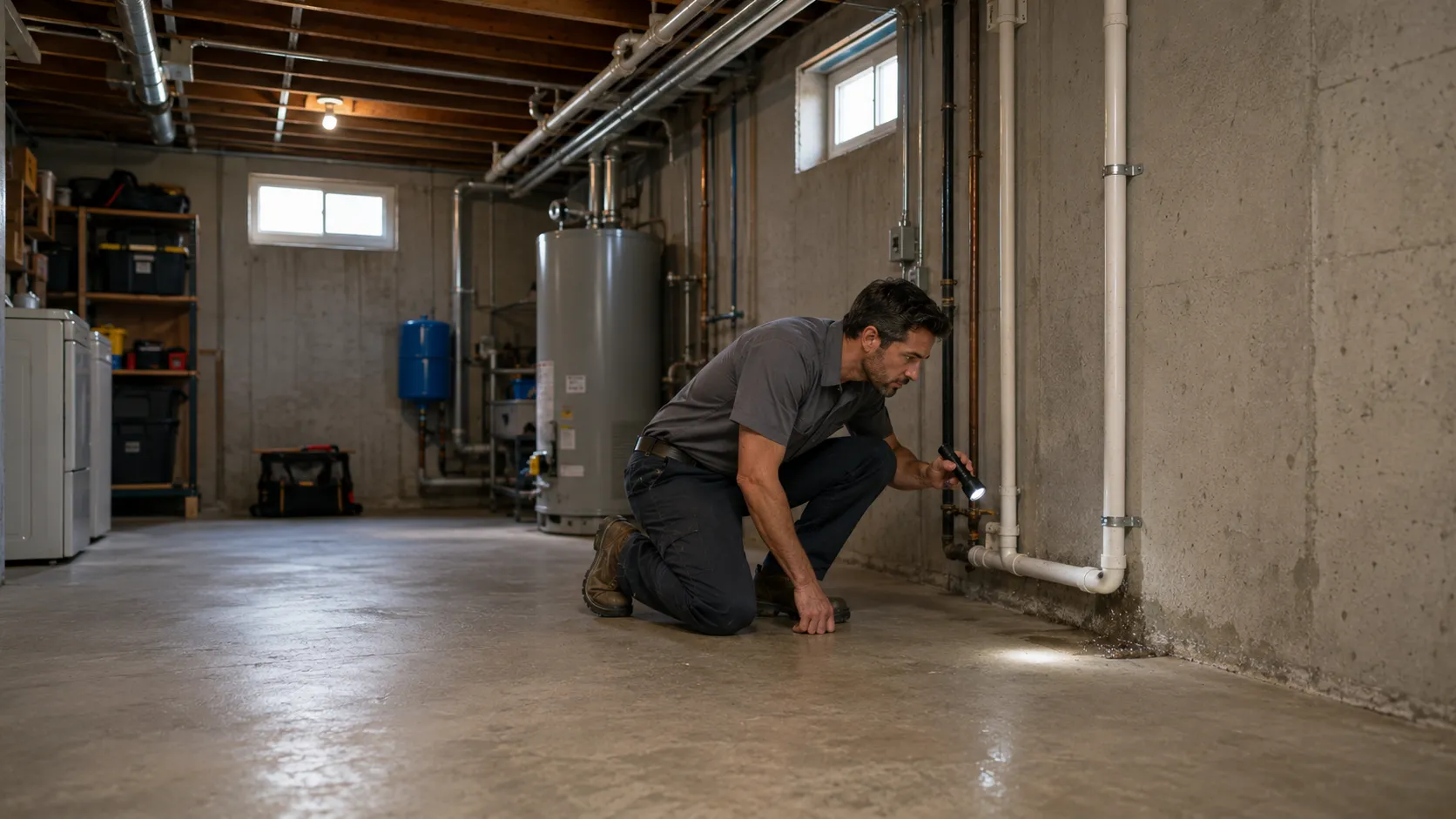
Check exposed pipes for condensation, dripping, or signs of corrosion. Look underneath sinks and around appliance connections. Inspect walls and floors for new stains or areas that feel unusually damp.
If you have access to your water meter, you can also perform a simple check. Make sure all faucets and water-using appliances are turned off, then watch the meter for several minutes. If the reading continues to change when no water is being used, there may be a leak somewhere in the plumbing system.
It’s also worth paying attention to changes in water pressure or unusual sounds. Hearing water running when the house is quiet can be an important clue.
When Moisture Points to a Pipe Problem
Sometimes, the source of the water isn’t obvious. You may see a damp spot several feet away from the nearest plumbing fixture, or notice a stain that appears to be spreading without an obvious explanation.
Water can travel through building materials before becoming visible, which means the location of the damage isn’t always the same as the location of the leak.
This is especially important in finished basements, where pipes may be hidden behind drywall or beneath flooring. Trying to guess the source based only on where you see the water can lead to unnecessary repairs in the wrong place.
If the signs suggest that a pipe itself may be leaking, pipe leak repair near me Geneva can help address the underlying problem rather than simply treating the visible moisture.
Don’t Make These Common Basement Mistakes
One of the most common mistakes is assuming that a basement leak is automatically caused by the weather. While heavy rain can certainly contribute to water intrusion, plumbing problems can happen at the same time—and sometimes the storm simply makes them easier to notice.
Another mistake is waiting for the area to dry completely before deciding what to do. A temporary leak can stop on its own and still return later.
It’s also a bad idea to ignore small changes because they don’t seem serious. A faint musty smell, a small water stain, or occasional dampness may be the first sign of a problem that becomes much harder to address later.
Instead, take photos, note when the moisture appears, and keep track of whether the problem happens only during storms or continues afterward. These details can help a professional narrow down the possible source.
A Wet Basement Doesn’t Always Mean the Same Thing
The key is to avoid making assumptions. Water in your basement after a storm could be caused by several different issues, and identifying the actual source is the first step toward choosing the right solution.
If the moisture keeps returning, appears in an unexpected location, or is accompanied by other plumbing warning signs, it’s worth having the situation evaluated rather than repeatedly cleaning up the same problem.
Don’t Let the Next Storm Find the Same Problem
Heavy summer rain can reveal weaknesses that homeowners might otherwise never notice. If you find unexplained moisture, new stains, unusual smells, or water around plumbing fixtures after a storm, take the opportunity to investigate before the next downpour arrives.
Contact Viper Services Company to discuss the signs you’ve noticed and determine whether your home may have a plumbing leak or another issue that needs attention. Finding the source early can help you avoid repeated water damage and more disruptive repairs later.